"It is that range of biodiversity that we must care for - the whole thing - rather than just one or two stars."
-David Attenborough
Questions? Email me, Ronak Sathyanarayana, at ronaks@goanimals.org.

Sunday, May 20, 2012

Bucks4Bucks Money Sent


After collecting $150, I have sent the money to two organizations, Oceana, and IFAW (International Fund for Animal Welfare). $75 goes to each organization. But just because I sent the money, doesn't mean that I'm finished with Bucks4 Bucks. We already have $17 to start off, and this time, my goal is to raise $200 by December of this year.

Sunday, March 18, 2012

Animals at Risk

Even though March 17 is St.Patrick's Day and many people are celebrating, many animals aren't celebrating for a reason. Six species that live in Ireland are now critically endangered or vulnerable. These animals are in big danger because of us.These 6 animals are Pine Martens, Grey Partridges, Red Deer, Pygmy Shrews, Viviparous Lizards, and the Wood Mouse.
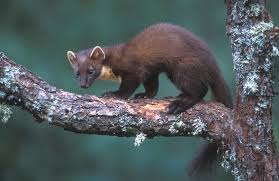


The Pine Marten belongs to the mustelid family, which also includes badgers, minks, otters, weasels and wolverines. People are the biggest threat to these animals. Habitat destruction, illegal poisonings, shootings and more have caused pine marten numbers to drop in recent years.
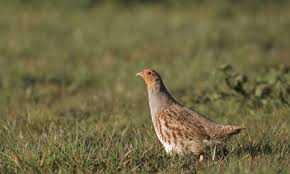


Hunting, habitat destruction, invasive species and other problems have plagued Ireland's native grey partridges. They are big danger thanks to us. But luckily, the National Parks and Wildlife Service and organizations like the Irish Grey Partridge Conservation Trust, these birds are making a comeback.
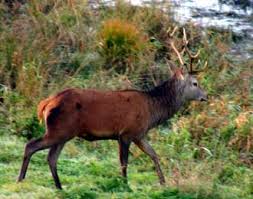


Ireland's largest wild mammal is the red deer. Because of reintroduction and conservation efforts, its populations are not suffering the same fate as Ireland's other native species.


The pygmy shrew is the only shrew native to Ireland. This animal has completely vanished in parts of Ireland where two invasive species, the bank vole and the greater white toothed shrew, are found. Small mammals like the pygmy shrew occupy central positions in food webs, so major changes in species composition, which are already occurring, will have big effects. These will affect bird and mammal predators as well as the invertebrates, seeds and seedlings that small rodents and insectivores feed on.
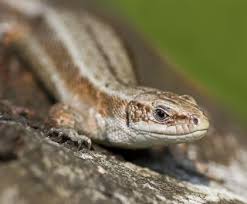

The viviparous lizard is the only terrestrial reptile native to Ireland. Although not currently classified as endangered, the lizard is under threat by humans mainly as a result of loss of habitat.


The tiny wood mouse has suffered a lot in recent years as a result of invasive species. Its numbers have decreased by greater than 50 percent in areas where the bank vole (an invasive species) is longest established.


All of these animals live in Ireland and they are in danger. It is all our fault. Habitat loss, hunting and invasive species are the main causes.

Sunday, January 8, 2012

Illegal Wildlife Trade Captured

An internet sting called "Operation Cyberwild" was connected to a dozen people in California and Nevada. They were suspected of selling endangered and protected species. Agents disguised as buyers on Craigslist, eBay, and other online stores. People found animal skin rugs, an elephant foot, a polar bear pelt, and numerous live animals. The California Fish and Game, the US Fish and Wildlife, and the Humane Society of the US helped stop this. Three people face California State Charges, and nine people face Federal Charges. They could face six months in prison, and fines up to $100,000.

List of Sold Items


  • a pair of Loggerhead sea turtle leather boots.


  • George Lovell, 49, of Las Vegas was arrested for allegedly selling a pair of Loggerhead sea turtle leather boots for $1,000. The arrests are a result of Operation Cyberwild, a task force investigation that led to the arrests of 10 people in California, as


  •  leopard skin coat.


  • Lisa Naumu, 49, of San Diego was arrested for allegedly selling an $8,000 leopard skin coat. The arrests are a result of Operation Cyberwild, a task force investigation that led to the arrests of 10 people in California, as well as two individuals in Neva


  • a rug made out of an endangered tiger.


  • Victor Northrop, 48, of Henderson, Nevada was arrested for allegedly selling a rug made out of an endangered tiger for $10,000. The arrests are a result of Operation Cyberwild, a task force investigation that led to the arrests of 10 people in California,


  • a live Western Scrub-Jay.


  • Karla Trejo, 42, of Sherman Oaks was arrested for allegedly selling a live Western Scrub-Jay for $185. The arrests are a result of Operation Cyberwild, a task force investigation that led to the arrests of 10 people in California, as well as two individua


  • an Asian arowana.


  • two live Red-whiskered Bulbul birds.


  • Henry Dao, 41, of Garden Grove was arrested for allegedly selling two live Red-whiskered Bulbul birds for $1,750. The arrests are a result of Operation Cyberwild, a task force investigation that led to the arrests of 10 people in California, as well as tw


  • a Hawksbill sea turtle shell.


  • Kamipeli Piuleini, 35, of Torrance was arrested for allegedly selling a Hawksbill sea turtle shell. The arrests are a result of Operation Cyberwild, a task force investigation that led to the arrests of 10 people in California, as well as two individuals


  • three birds, including a Eurasian kestrel and a Black-shouldered Kite, for $150


  • Tyler Homesley, 24, of Ramona was arrested for allegedly selling three birds- including two protected migratory birds, a Eurasian kestrel and a Black-shouldered Kite- for $150. The arrests are a result of Operation Cyberwild, a task force investigation th


  • an elephant's foot, a mounted hawk and a mounted owl.


  • Alfredo Vazquez, 50, of Montebello was arrested for allegedly selling an elephant's foot. The arrests are a result of Operation Cyberwild, a task force investigation that led to the arrests of 10 people in California, as well as two individuals in Nevada.


    Alfredo Vazquez, 50, of Montebello was arrested for allegedly selling a mounted hawk. The arrests are a result of Operation Cyberwild, a task force investigation that led to the arrests of 10 people in California, as well as two individuals in Nevada.Alfredo Vazquez, 50, of Montebello was arrested for allegedly selling a mounted owl. The arrests are a result of Operation Cyberwild, a task force investigation that led to the arrests of 10 people in California, as well as two individuals in Nevada.


  • a bear skin rug.


  • James I. Colburn, 66, of Leona Valley was arrested for allegedly selling a bear skin rug. The arrests are a result of Operation Cyberwild, a task force investigation that led to the arrests of 10 people in California, as well as two individuals in Nevada.


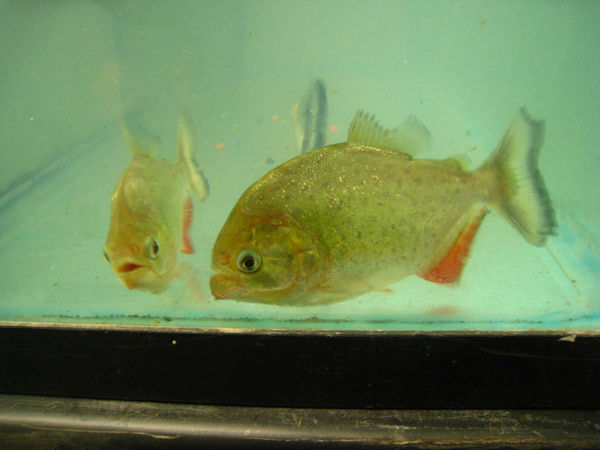
  • a live piranha.


  • Blake William Diekman, 27, of South Pasadena was arrested for allegedly selling a live piranha. The arrests are a result of Operation Cyberwild, a task force investigation that led to the arrests of 10 people in California, as well as two individuals in N
    Blake William Diekman, 27, of South Pasadena was arrested for allegedly selling a live piranha. The arrests are a result of Operation Cyberwild, a task force investigation that led to the arrests of 10 people in California, as well as two individuals in N

    Old Mice Made "Young"

    An endangered Saint Andrew beach mouse. Picture File: MM7533 1198159       Submitter: JOEL SARTORE   Copyright: 69 (IS - NO PERMISSION,50% PAYMENT FOR PUBLISHED AND SELECTS (1999 AND LATER CONTRACTS))   Subject: PANAMA CITY (FLORIDA);MICE;RARE, ENDANGERED, AND THREATENED ANIMALS;STUDIO SHOT;CLOSE UP;WHISKERS; Legend: An endangered Saint Andrew beach mouse. Summary: one animal,no people,color image,photography,studio shot,endangered species,white background,front view,saint andrew beach mouse,peromyscus polionotus peninsularis,close up,animal feet,whiskers,sartore rare,b10963 Location: Panama City, Florida.If you've read Mrs.Frisby and the Rats of NIMH well, this is the exactly like how the rats of NIMH could live so long. Scientists have injected  muscle-derived stem cells into the mice, which allows them to live three times longer. Scientists think this could also work on humans. To test it, they put a disease (progeria) which makes its life shorter. That disease works like some human diseases. After that, they put the stem cells in. Amazingly it worked. This could be used on humans to allow us to live longer. 

    Hybrid Silkworm Spin Spider Silk

    Glowing silk.Spider silk is stronger than you think. If you have enough of it, you can make a super-strong material, but still be lightweight. As we get more technologically advanced, we get closer to making spider silk. But until then, scientists have found a way to make spider silk from silkworms. They have grown genetically modified silkworms that produce stronger silk, or in other words, spider silk. What they did was extract the spider silk gene from spiders and put it in the silkworm. The silk was still 96-98% silkworm though. But the silk is stronger and more durable. this is good enough until we can be able to produce it ourselves.

    New Crab Species Discovered

    Yeti crabs picture: lost world found in deep-sea AntarcticaA new species of Yeti Crabs were found near hot, mineral-rich hydrothermal vents in an ocean off the coast of Antarctica. Researchers had a submersible, camera-equipped robot, which allowed them to film barnacles, anemones, octopus, and crabs. The camera had found big groups of Yeti Crabs. Male Yeti Crabs live nearest to vents to feed on swarms of bacteria. The females are farther, because they have to protect their embryos. If you know what a Yeti is, it's not that hard to tell what the crab looks like.  

    Sunday, January 1, 2012

    Banana Sam Found

    On Thursday, a monkey was stolen from San Francisco Zoo. The thieves had cut two holes into the monkey exhibit and took the monkey. There is a $5000 reward for the person who finds and brings back the monkey to San Francisco Zoo.

    Banana Sam after he was rescued
    At Stern Grove Park, minutes before 9 p.m. on Saturday, a resident found Banana Sam, a male Squirrel Monkey ( see Monkey Stolen From Zoo for more information), walking by a tree. The resident coaxed the Squirrel Monkey into their own backpack. The person returned Banana Sam to San Francisco Zo, and later zoo officials verified its identity. Banana Sam looked hungry, thirsty, and frightened. It's not certain that the rescuer got the reward. Zookeepers returned Banana Sam to the other 17 Squirrel Monkeys. This is an act of vandalism and trespassing. The police are trying to find the burglar. No one has been arrested yet.  On Friday, the news about how Banana Sam got stolen spread very quickly. Someone had also set up a fake Twitter account tracking the whereabouts of Banana Sam. The zookeepers and workers at San Francisco Zoo are very happy about the return of their beloved Squirrel Monkey, Banana Sam, the oldest in all of the Squirrel Monkeys at the zoo.

    Saturday, December 31, 2011

    Monkey Stolen From Zoo

    
    San Francisco Zoo officials are asking for the publics help after a monkey was stolen from an exhibit overnight.
    Banana Sam before he got stolen
    
    Banana Sam, a male Squirrel Monkey, was stolen from San Francisco Zoo. On Thursday night, two guards were patrolling the 100 acre zoo when a man stole Banana Sam. San Francisco Zoo has doubled the security to prevent the burglars from entering again. The other 17 Squirrel Monkeys are held indoors for prevention of loss. Banana Sam was 17 years old, one of the oldest in the group. It is illegal to own a Squirrel Monkey as a pet in California, but it is not true in all states. There are many pet traders who take Squirrel Monkeys. They would probably sell Banana Sam since Squirrel Monkeys cost from $100- a few thousand dollars. The thieves had cut through a back perimeter gate. They then cut through the mesh surrounding the monkey exhibit and stole Banana Sam. Zookeepers are hoping the robbers will reconsider keeping the Squirrel Monkey and return Banana Sam. squirrel Monkeys have large teeth, and they will bite. The good thing is that Banana Sam has a microchip implant so the zookeepers can identify him. San Francisco Zoo has dealt with animal robberies before. Two teenagers were caught stealing a Koala to impress their girlfriend. A reward of $5000 will be given to the person who finds and brings back Banana Sam to San Francisco Zoo.

    Friday, December 30, 2011

    New Horned Viper Found

    Snake picture: Matilda's horned viper on a branchIn a remote Tanzanian forest a new horned viper was discovered. It was called Matilda's Horned Viper. Matilda's horned Viper is 2.1 feet long and black and yellow zigzag markings and yellow hornlike scales above its green eyes. The snake eats frogs at night.  Matilda's Horned Viper are venemous like all vipers. Males have darker scales and bigger heads than the female. These snakes usually stay in the trees, but bigger ones will live in ground burrows. Unfortunately, these snakes are critically endangered. Its habitat is growing smaller each day.The exact location of these snakes will be hidden just so pet collecters won't take them.

    Copyrighted ©

    Pigeons are Good at Math?

    pigeons do mathPigeons are thought to be dull. We think that they don't know much. Well, our opinions are completely wrong. A new study shows that pigeons can count to nine. The study also shows that they have equivalent skills to primates besides us. Researchers think that this ability is in many birds. To see their ability, they first taught them 1,2,and 3. They gave the pigeons pictures 1,2, or 3 objects. If they completed the task correctly, they would be given a snack. Later they tested them on 1,2,3,4,5,6,7,8, or 9. They would give 2 numbers and the Pigeon would have to choose the smaller number. Again, the Pigeon succeeds. Scientists thought primates and birds have this ability because of a distant relative. If that was true, many other animals would share the ability. The other way is that these animals learnt it independently. Animals are always getting smarter.

    Copyrighted ©

    New Shark Species Found

    Four new "rapier wielding" shark species have b een found by researchers in the California Academy  of Sciences. In a 1600 foot deep trawl of Mozambique, an African Dwarf Sawshark was accidentally captured. This animal is only the seventh species of sawshark we know of. The shark has a long tooth-studded snout for which it uses as a sword. The predator uses its snout by whipping it through schools of fish, which it then eats the injured fish. Another shark discovered was a species of Angel Shark. It was called Squatina caillieti. It was found in a 1200 foot deep water of the islan of Luzon. Luzon is an island part of the Phillipenes. The Angel Shark has big pectoral fins that resemble wings, and it lies in the sand and waits for prey to pass by. When it comes, it strikes like a ray. The other two sharks are species of Lanternshark. They were found in Taiwan and South Africa. More than 100 sharks have been found this year. New discoveries are yet to be found.
    The African dwarf sawshark.
    African Dwarf  Sawshark
    
    Copyrighted ©

    Monday, December 19, 2011

    Smallest Frogs Found in Papua New Guinea

    The tiny frog Paedophryne dekot.In Papua New Guinea, the Paedophryne dekot, which is 8.5-9 mm. long, and the Paedophryne verrucosa, which is 8.8-9.3 mm. were found, each smaller than an M&M. The smallest frog use to be 10mm. They are the smallest frog and tetrapod (vertabrates with 4 legs).  These frogs eat mites, which other frogs won't eat because of their size. This shows they have an important role in the ecosystem. Just because they're small, doesn't mean they're easy to catch. Researchers tried catching them with bare hands with no luck. Right before you touch them, the hop away. The researchers say there are still other tiny frogs out there.

    Copyrighted ©
    

    Friday, November 25, 2011

    Panamian Lion Rescue

    In Panama, many lions were rescued from a zoo next to the Gamboa Resort. 3 female lions and many other animals were locked up in cages and have been there for 14 years. The Denver Wild Animal Sanctuary contacted the police and ANAM (Panama's environmental arm of the government). To help, the Denver Wild Animal Sanctuary Carried the lions to a truck. The truck transported them to a plane, where they would be taken to the sanctuary. Now, the lions live peacefully with the other lions in the sanctuary. The other animals at the zoo were taken to a rehabilitation center, soon to be released into the wild.

    Copyrighted ©

    Coati Rescued From Warehouse

    In a Denver Warehouse, a coati was set free by its owner, thinking it wouldn't make a good pet. In case if you don't know what a coati is, a coati, also known as the Brazilian Aardvark, is a relative of the raccoon. Coatis are 13-27 in. long, weigh 4.4-18 lbs, have sharp teeth and live in Central America. Coatis are usually brown  or black, and have a white and brown stripes on its tail. Some people found this baby Coati and named it Maurice. They took Maurice to the vet to check if it was healthy. They also found out it is illegal to keep the young Coati, so they started calling humane societies and animal control officials to find it a home. They finally found the Denver Wild Animal Sanctuary, where they had 5 Coatis. Maurice was brought to the sanctuary and is living happy with its new family and home.

    Copyrighted ©

    New Spider Found in Australia

    In Australia, a new "albino" spider was found. Scientists say it is not completely albino because it still has some brown on its abdomen. The spider is 1.2 in. wide, and was found by a man who lived in a town in western Australia. The man found the spider, caught it in a jar, and sent it to the Western Australian Museum. They think it is a trapdoor spider, that lives in burrows its whole life, like other trapdoor spiders. Scientists are still researching this spider to learn mor about it.
    A white spider.

    Thursday, November 10, 2011

    Howl to the World

    On April 26, 1986, in a place called Chernobyl, the Chernobyl Nuclear Power Plant exploded. Chernobyl is a place in what is now Ukraine. Some people said that it was the worst nuclear disaster in the world. Not only did the people get wiped out, but so did the animals. Foxes, lynxes, raccoons, pigs, and not to mention, wolves. But a couple of years ago, animals started popping up in Chernobyl, especially wolf packs. Chernobyl has been closed to people because of the radiation levels, but there are still small villages there. But animals haven't just disappeared in Chernobyl. The same thing happened in Yellowstone National park. In the 1980's, people disliked wolves, so they killed them off. Soon, these wolves became critically endangered. Also, as the wolves died, the beavers, trees, and even crows, died. But rescue groups have helped these wolves return, and somehow all the animals returned. But why? Well, when the wolves died, There were too many Elk. The Elk ate too much of the trees which meant the trees would die. With less trees, the beavers didn't have enough building supplies for their dam. One animal, can make a big difference. This shows that life finds a way. Humans do it quickly, meaning that it doesn't last long, but Earth does it slowly, making it last longer.

    Thursday, October 27, 2011

    West Nile Virus Strikes Animals in North America

    Thousands of birds, horses, and humans have been hit by West Nile Virus across North America since 1999, when it was first discoverd. In case you don't know, West Nile Virus is a virus found in 48 species of mosquitos, 250 species of birds, and 18 species of mammals. The USGS is trying to learn more about West Nile Virus. They are also joining with other agencies for help. People aren't sure of the ways West Nile virus is affecting wildlife, but the NWHC (National Wildlife Health Center) is working on studies to research West Nile Virus. So, to be safe, wash your hands, and stay  clean because one of those 18 species of mammals affected by West Nile Virus are humans.

    Hawk With Nail in Head Rescued

    The hawk with the nail in its head has been found and had later been brought to the Wildlife Center of Silicon Valley and has been healing for the past few days. During its transport after it had been capured, the nail had fallen out with no trauma or bleeding. WildRescue had been notified after several attempts to capture it had failed. The rescuers that tried to save it had used a trap called the bal-chatri. The bal-chatri is a trap made of a wire mesh. A reward of 10,000 dollars has been offered for information on the arrest and conviction of whoever harmed the bird. Next time you see an animal in crisis, take the initiative, and call the nearest animal rescue or wildlife center.

    Tuesday, October 25, 2011

    Javan Rhino Extinct in Vietnam

    On October 25, 2011, the WWF (World Wildlife Fund) and the IRF (International Rhino Foundation) concluded that one of the subspecies of the Javan Rhino is extinct in Vietnam. There are two subspecies, the Indonesian and the Vietnamese. The WWF also says that the last rhino was shot in the leg by a poacher. Poachers hunt rhinos for the ivory in their horn. Many other animals are endangered because of poaching like the tiger, the elephant, the seal, and lots more. But there are still 40 Javan Rhinos in a National Park in Indonesia. The WWF is working to save these rhinos by protecting them from poachers. Remember to buy no endangered animal by-products because they could be last of their kind.

    Sunday, October 23, 2011

    Seaweed Killing Coral

    Georgia Tech have been doing expirements in the ocean. They have recently found out that seaweed also kills coral. Other coral killing objects are heat, pollution, and even sunscreen. They found that some seaweed cause coral bleaching and give off anti-coral chemicals. For the past decades, scientists have found coral reefs being dominated by seaweed, but they aren't sure if algae is also to blame. Don't think that seaweed is useless, because scientists thik it has a reson to live.
    Coral reef picture: A scientist prepares coral colonies for an experiment.