Sunday, September 30, 2012

Four New Species Discovered
In Peru, four new species were discovered. The forest in which these animals live in is nicknamed "Heaven".
 |
| Night Monkey |
 |
| Common Shrew Opossum |
 |
| Enigmatic Porcupine |
 |
| Small Eared Shrew |
This species of shrew is not actually called the small eared shrew. The species has not been named yet. This species is much smaller than normal, super small eyes an ears, and eats insects. Not much is known about this shrew.
California's Official Marine Reptile
California's new official marine reptile is the leatherback sea turtle.

Sunday, September 23, 2012
Giant Turtle Rescue

Top 9 most Endangered Animals
The top 9 most endangered animals are:
 |
| Sumatran Rhino |
 |
| Pygmy Sloth |
 |
| Bullock's False Toad |
 |
| Brazilian Butterfly |
 |
| Santa Catarina's Guinea Pig |
 |
| Luristan Newt |
 |
| Tarzan's Chameleon |
 |
| Tonkin Snub-nosed Monkey |
 |
Great Indian BustardIt is very important to help save these precious animals. |
Sunday, September 16, 2012
New Monkey Discovered

"Zombee" Attack!

Killer Whales are Good Parents?

Sunday, September 9, 2012
Japanese River Otter Declared Extinct
After 30 years of not seeing the japanese river otter, scientists have declared it extinct. But, in 1999, scientists found droppings from the otter, and they believe that there might be hope for the otter. If it is still alive, than it is in deep hiding. Some scientists have given up searching for it, but many haven't, so the search still continues.
Related news:A subspecies of the asian black bear, (also known as the moon bear) and the horseshoe bat have been declared extinct.
Related news:A subspecies of the asian black bear, (also known as the moon bear) and the horseshoe bat have been declared extinct.
 |
| Drawing of japanese river otter |
 |
| Horseshoe bat |
 |
| Moon bear |
Sharks are Good Students?
Scientist have recently done tests on juvenile lemon sharks. Some of the sharks were trained and the others weren't. Scientists observed that the untrained sharks figured out what to do faster when the trained sharks were nearby. This is the first time a cartilaginous fish demonstrated social learning. Sharks are smarter than you think.


New Stick Insect Discovered
In the Philippines, a new stick insect was discovered, but it is unlike any other stick insect. This stick insect has no wings, lives on the ground instead of the trees, and has a turquoise head, and an orange body. But most amazing of all, it releases a foul odor when it comes across a predator. Since it is so different from the normal stick insect, scientists have given it its own genus. Scientists are still trying to find out what it is.


Monday, September 3, 2012
Lonesome George Dies
Lonesome George, believed to be the last subspecies of the Galapagos Tortoise, dies at an estimated age of 100. Scientists are doing tests to determine the cause of his death. The death was very strange since it should have died at the age of 200. With no offspring or other females to mate with, Lonesome George was the rarest animal on Earth.
These tortoises used to be thriving until the 1900's. poachers killed the tortoises for their meat. They were soon critically endangered. Laws were put up to protect the tortoise, and they used to have other tortoises to breed with Lonesome George, but none of the were successful.

These tortoises used to be thriving until the 1900's. poachers killed the tortoises for their meat. They were soon critically endangered. Laws were put up to protect the tortoise, and they used to have other tortoises to breed with Lonesome George, but none of the were successful.
The last of the Pinta Tortoises are gone.
But, we still have time to rescue all of the
other endangered animals of the world
(see "Animals That Could go Extinct in 2012)
Even though Lonesome George is gone, we still remember
how great, he was to the Animal World.

Free the Shark Week
This week is Free the Shark Week. Thousands of sharks are killed each year, and many people say they're scared of sharks, but sharks are more scared of us, then we are of them. In some countries, the killing of sharks is illegal, but it still happens.


Shouldn't something be done about this?
This week, it is time to celebrate one of the great
predators of the ocean.
The shark
Red Fish, Blue Fish Captured on Camera
113 years. That's how long it has been since someone has recorded about the rare Chaunacaops coloratus Anglerfish. But, this is the first time it has ever been recorded on video. Instead of swimming, this fish walks on the sea floor. Size ranges from 3-8 inches, and scientists believed that the color of the fish was red, but it actually is blue when it is young. The video of the fish was done by Monterey Bay Aquarium and was captured by a remote operated vehicle. They recorded it off the coast of northern California and 11,000 feet below the surface.


Saturday, June 9, 2012
Animals are AWESOME!!!
My blog "Animals are AWESOME!!!", has now turned into a website at "www.goanimals.org". And related news, I'm still collecting money for my fundraiser bucks4bucks. My goal is $200, and so far we have $17.
Watching the Endangered Jaguar
Scientists have been putting camera traps all over the world to find footage of rare and endangered animals. An in one of them, they found that jaguars are returning, but they this footage at a Palm Oil Plantation. It is important to help these poor animals. In other cameras, they found videos of other big cats, such as ocelots, and servals.


JAWS--x2
Scientists have been researching the huge Great White Shark migrations, but found some astonishing news. They found that half go to a place west of Bass Strait. But the other half didn't go there. They went the opposite direction and headed towards Australia. These two sharks live in different places but have alike genes. Scientists believe there are two types of Great Whites; Great White Sharks, and the the Australian Great White Shark.
Sunday, May 20, 2012
Bucks4Bucks Money Sent
After collecting $150, I have sent the money to two organizations, Oceana, and IFAW (International Fund for Animal Welfare). $75 goes to each organization. But just because I sent the money, doesn't mean that I'm finished with Bucks4 Bucks. We already have $17 to start off, and this time, my goal is to raise $200 by December of this year.

Sunday, March 18, 2012
Animals at Risk
Even though March 17 is St.Patrick's Day and many people are celebrating, many animals aren't celebrating for a reason. Six species that live in Ireland are now critically endangered or vulnerable. These animals are in big danger because of us.These 6 animals are Pine Martens, Grey Partridges, Red Deer, Pygmy Shrews, Viviparous Lizards, and the Wood Mouse.
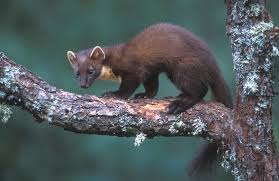 The Pine Marten belongs to the mustelid family, which also includes badgers, minks, otters, weasels and wolverines. People are the biggest threat to these animals. Habitat destruction, illegal poisonings, shootings and more have caused pine marten numbers to drop in recent years.
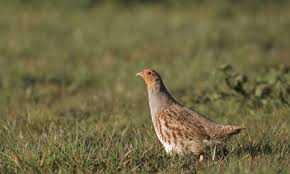 Hunting, habitat destruction, invasive species and other problems have plagued Ireland's native grey partridges. They are big danger thanks to us. But luckily, the National Parks and Wildlife Service and organizations like the Irish Grey Partridge Conservation Trust, these birds are making a comeback.
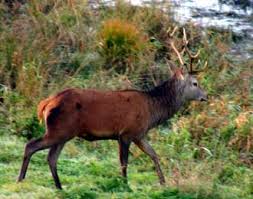 Ireland's largest wild mammal is the red deer. Because of reintroduction and conservation efforts, its populations are not suffering the same fate as Ireland's other native species.

The pygmy shrew is the only shrew native to Ireland. This animal has completely vanished in parts of Ireland where two invasive species, the bank vole and the greater white toothed shrew, are found. Small mammals like the pygmy shrew occupy central positions in food webs, so major changes in species composition, which are already occurring, will have big effects. These will affect bird and mammal predators as well as the invertebrates, seeds and seedlings that small rodents and insectivores feed on.
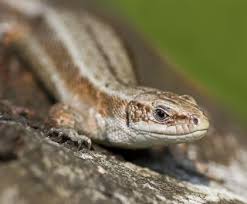 The viviparous lizard is the only terrestrial reptile native to Ireland. Although not currently classified as endangered, the lizard is under threat by humans mainly as a result of loss of habitat.
 The tiny wood mouse has suffered a lot in recent years as a result of invasive species. Its numbers have decreased by greater than 50 percent in areas where the bank vole (an invasive species) is longest established.
All of these animals live in Ireland and they are in danger. It is all our fault. Habitat loss, hunting and invasive species are the main causes.
The pygmy shrew is the only shrew native to Ireland. This animal has completely vanished in parts of Ireland where two invasive species, the bank vole and the greater white toothed shrew, are found. Small mammals like the pygmy shrew occupy central positions in food webs, so major changes in species composition, which are already occurring, will have big effects. These will affect bird and mammal predators as well as the invertebrates, seeds and seedlings that small rodents and insectivores feed on.
All of these animals live in Ireland and they are in danger. It is all our fault. Habitat loss, hunting and invasive species are the main causes.
Subscribe to:
Comments (Atom)